- Apr 23 Sun 2017 20:03
-
轉化擬人修辭5
- Apr 23 Sun 2017 19:49
-
轉化擬人修辭4

- Apr 23 Sun 2017 19:47
-
轉化擬人修辭3

- Apr 23 Sun 2017 19:42
-
轉化擬人修辭2


- Jan 06 Fri 2017 19:31
-
英文兒童文學 Week 17

Class Notes
1. Literary realism
Literary realismis part of therealist art movementbeginning with midnineteenth-century French literature(Stendhal), andRussian literature(Alexander Pushkin) and extending to the late nineteenth and early twentieth century.Literary realism, in contrast to idealism, attempts to represent familiar things as they are.Realistauthors chose to depict everyday and banal activities and experiences, instead of using a romanticized or similarly stylized presentation.
- Dec 31 Sat 2016 00:52
-
英文兒童文學 Week 16

Class Notes
1. US College Students Don't Learn Core Skills: Study
- critical thinking
- reasoning
- writing skills
- Dec 30 Fri 2016 13:27
-
英文兒童文學 Week 15
Class Notes
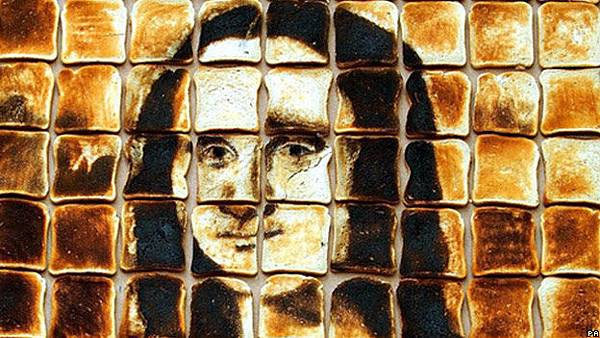
1. You are toast.
A phrase used by Canadians to indicate that the person being addressed is in deep trouble. Usually (but not always) it is the person uttering the phrase who is offering trouble to the one being addressed.
- Joe: "Hey, I broke your favourite autographed hockey stick; sorry..."
Wayne: "Oh, you're toast,eh!"
- Dec 17 Sat 2016 21:31
-
英文兒童文學 Week 14
Class Notes
1. Politician & Statesman
We hear a lot about politicians but not enough about statesmen. People think of a politician as someone having one primary objective -- to get elected. The general view of a statesman, however, is of someone interested in the common good of constituents and not his own ego. An example of a politician is a person running for office who flip-flops on issues as the polls change. The politician makes promises but may not deliver on them once elected. A statesman is a person who stands by his ideals and does everything in his power to do what he believes is right for the people of his country.
Statesman Principles
Statesmen stand on a platform of fundamental truths. They believe in certain core values and don't change beliefs to get ahead in politics. A statesman, however, may change his policies and methods of going about achieving his goals. He may even be criticized for doing so, but he believes that the short-term sacrifice is necessary to the long-term triumph. According to the author of "Politics Among Nations," Hans J. Morgenthau, statesmen are political realists. They look at policy in terms of its effect on the nation.
- Dec 17 Sat 2016 19:27
-
英文兒童文學 Week 13
Class Notes
1. Three Christmas stories
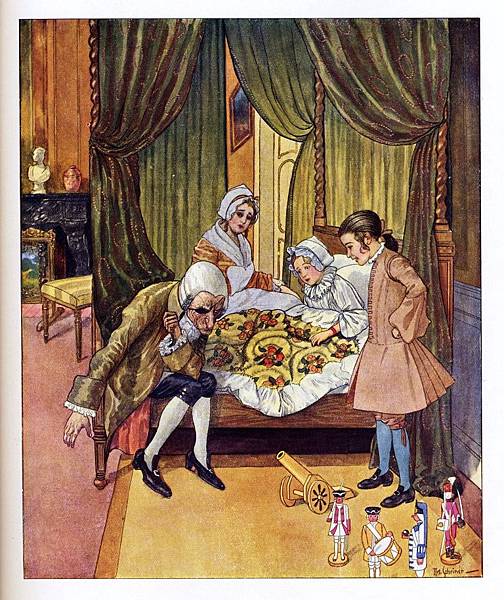
(1) The Nutcracker and The Mouse King – E.T.A Hoffman
The Nutcracker and the Mouse King is a story written in 1816 by E. T. A. Hoffmann in which young Marie Stahlbaum’s favorite Christmas toy, the Nutcracker, comes alive and, after defeating the evil Mouse King in battle, whisks her away to a magical kingdom populated by dolls. In 1892, the Russian composer Pyotr Ilyich Tchaikovsky and choreographers Marius Petipa and Lev Ivanov turned the story into the ballet The Nutcracker, which became one of Tchaikovsky’s most famous compositions, and one of the most popular ballets in the world.
(2) A Christmas Carol – Charles Dickens
- Dec 11 Sun 2016 20:13
-
英文兒童文學 Week 12

Class Notes
1. Carpe diem
Carpe diemis aLatinaphorism, usually translated "seize the day", taken from book 1 of the Roman poetHorace's workOdes(23 BC).
Related but distinct is the expression "memento mori" (remember that you are mortal) which carries some of the same connotation as "carpe diem". For Horace, mindfulness of our own mortality is key in making us realize the importance of the moment. "Remember that you are mortal, so seize the day." Over time the phrase "memento mori" also came to be associated with penitence, as suggested in manyvanitaspaintings. Today many listeners will take the two phrases as representing almost opposite approaches, with "carpe diem" urging us to savour life and "memento mori" urging us to resist its allure. This is not the original sense of the "memento mori" phrase as used by Horace.
- Dec 02 Fri 2016 17:43
-
英文兒童文學 Week 11


